
Reading
Extending our imaginations
Intent:
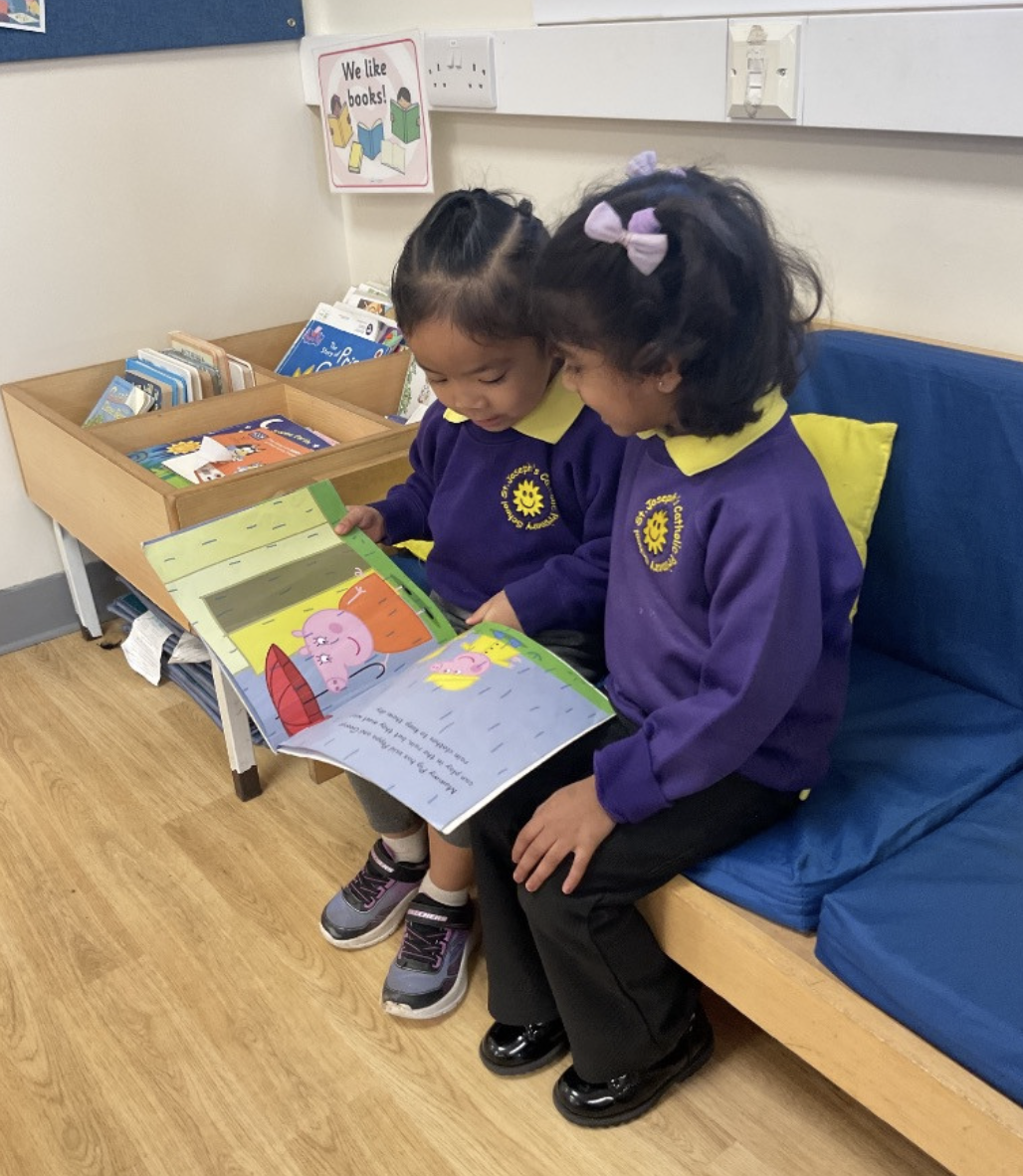
Reading lies at the heart of St. Joseph's curriculum, where we strive to ignite a lifelong love of reading and language through the immersion of stories and texts that interest, inspire and excite our children. St. Joseph's provides a reading culture that supports children in developing good reading habits that will support them throughout their education, in their personal life and beyond. Early reading is a school priority, and we recognise that the early years of a child’s life are crucial. The experiences that we offer the children in the EYFS and in KS1 are fundamental in laying the foundations for future reading success. Reading interest is sparked in our children from day one and children have picture books to read initially, leading to phonics-based books and on to more complex novels as they reach KS2. These books have been carefully selected to support both reading and the progression of writing. A range of genres are widely offered and celebrated through a variety of activities that in turn, inspire and teach our children to be confident and competent writers!
Implementation:
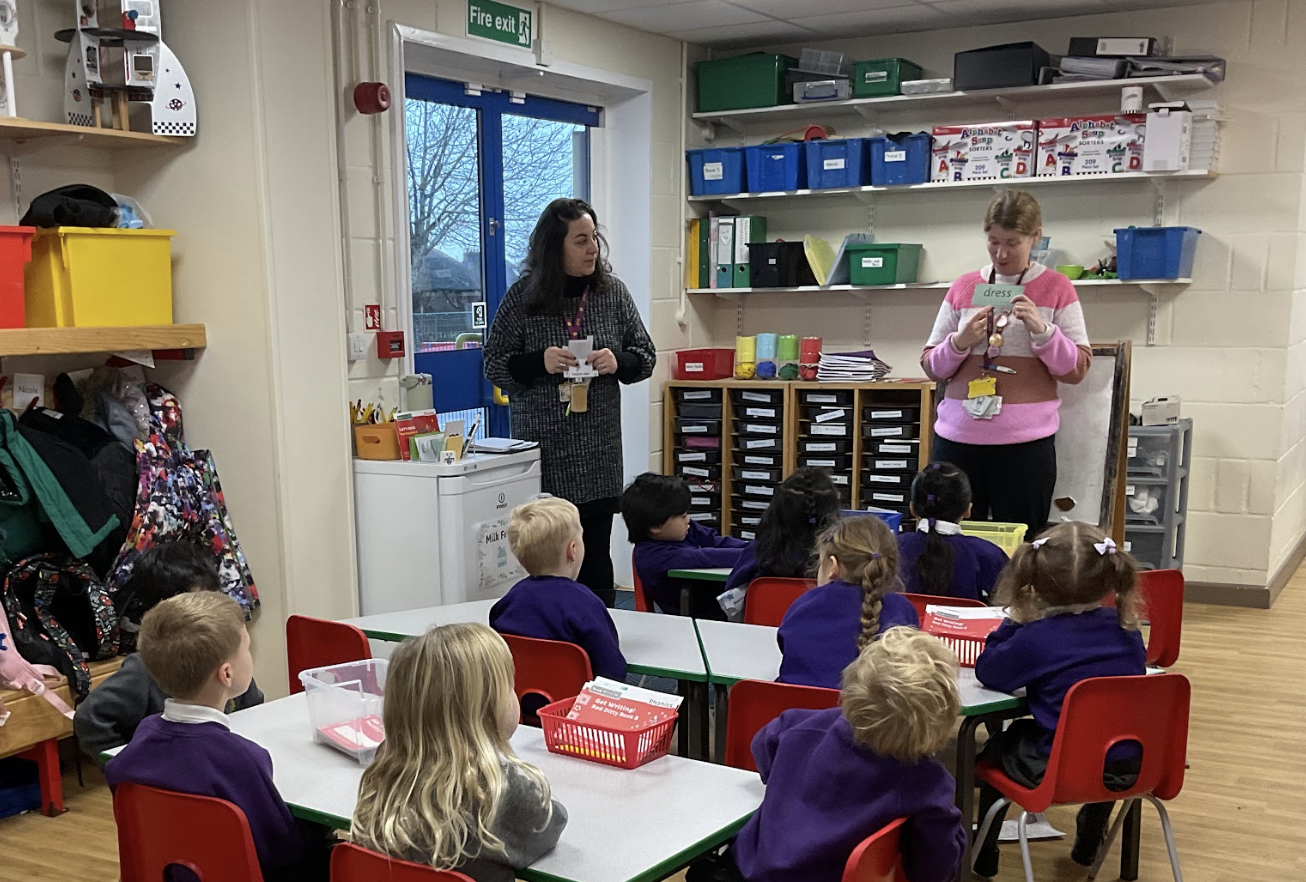
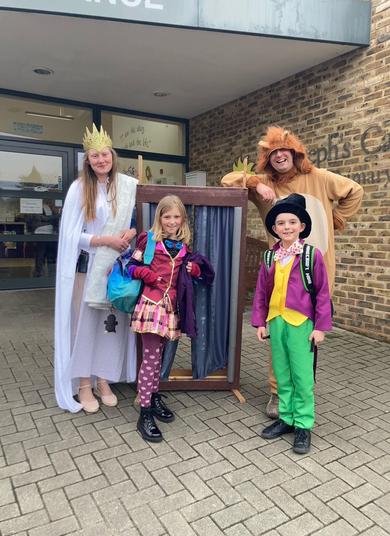
Reading is seen at the very heart of all education at St Joseph's. The children begin their journey with reading with the teaching and fidelity to a phonics programme (Read Write Inc), alongside reading books, which are aligned to work on the sounds at their appropriate level for decoding and blending purposes. Children are heard to read daily in phonics lessons. Children are also encouraged to enjoy listening and exploring stories. Therefore, a library book is provided for children to explore and question to aid their comprehension. As children complete the phonics scheme, Master Readers is introduced as guided reading to delve deeper and extend their comprehension skills. This is taught through five sessions a week, focused on one text for the half-term to allow immersion in the text, explore and expand their vocabulary and then specific teaching and modelling of the comprehension skills. In addition to this, children visit their key stage library once a week. Celebrating World Book Day, Travelling Book Club and inviting authors in are just some of the many experiences we provide for our children. Reading for pleasure is at the heart of all that we do, and we have pupils that have developed the habit and passion for reading regularly and widely. All children will have a clear love and pleasure for reading, where they will freely pick up a book and become fully immersed in the plot, whilst extending their vocabulary and comprehension.
Impact:
In Reading, clear progress is documented, following regular assessments; through increased reading stamina and fluency; and richer and deeper discussions within comprehension, with the aim that children transfer and use their learning in reading as models for their own writing.
Phonics
Read Write Inc
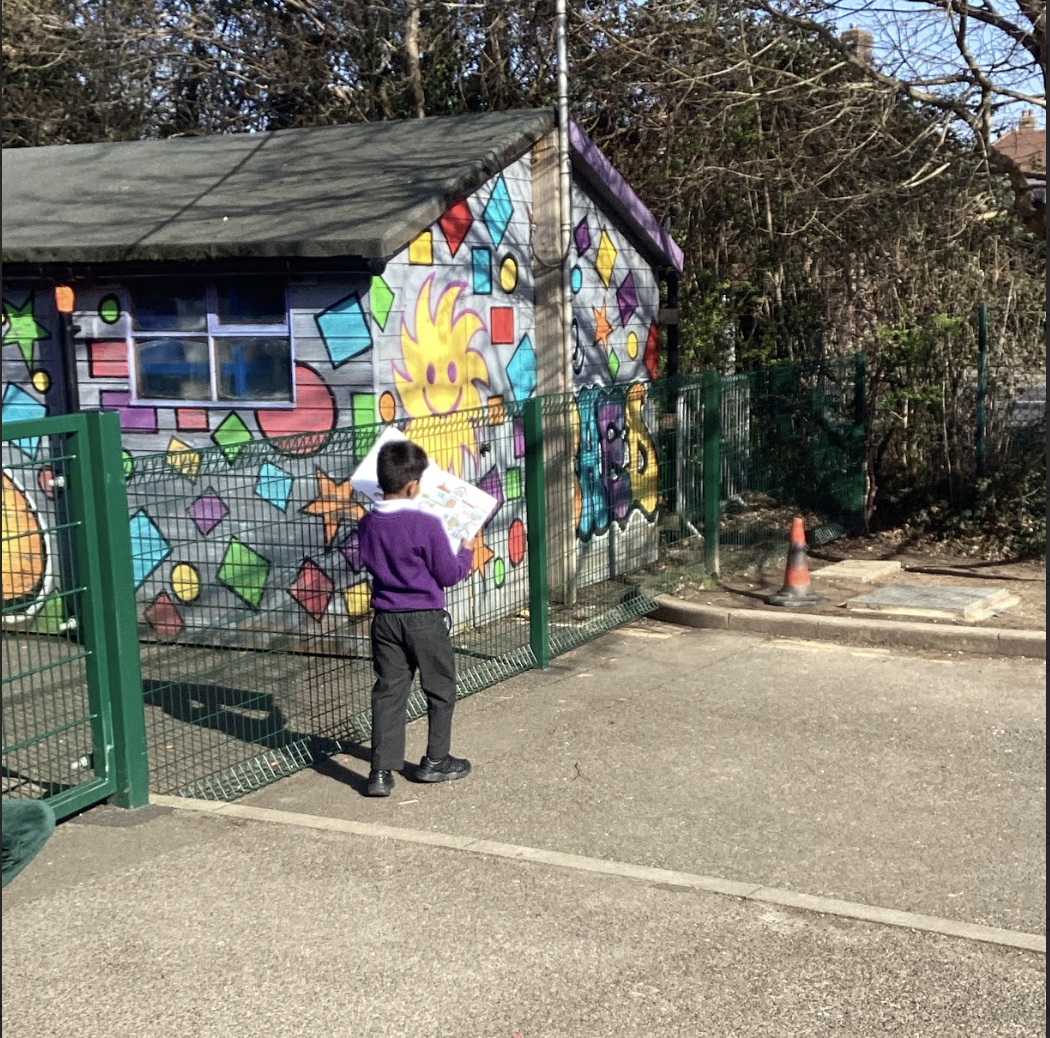
At St Joseph’s, we teach early reading through the Read Write Inc. Phonics programme, a highly structured and systematic synthetic phonics approach published by Oxford University Press. The programme enables children to develop fluent reading, secure comprehension, confident spelling and effective writing skills, while also encouraging them to articulate their ideas clearly and thoughtfully.
Read Write Inc. is carefully sequenced, with each lesson building on prior learning and creating clear links between phonics, reading and writing. Pupils are taught in targeted progress groups, ensuring that learning is closely matched to their stage of development and that every child can achieve success. Regular assessments enable teachers to monitor progress closely and provide timely support where needed.
Oracy is at the heart of every lesson, with children engaging in purposeful partner discussions that help them rehearse, explain and deepen their understanding. In addition, one-to-one tutoring and targeted interventions ensure that pupils who require additional support, including those with SEND, are able to keep pace with their peers and make strong progress.
The programme is supported by a wide range of high-quality resources, including fully decodable reading books, home readers and carefully planned reading, spelling and writing activities, helping children to become confident, enthusiastic and successful readers from the very beginning of their learning journey. For further information, please visit the Read Write Inc. website.
How Read Write Inc works:
- Each lesson builds on prior learning, with phonics, reading and writing closely linked and sequential.
- Children learn in targeted progress groups so that everyone can take part and achieve well. No child is left behind. Regular half‑termly assessments ensure rapid progress.
- Talk is central to every lesson. Children follow familiar routines that help them explain, practise and embed their learning with a partner.
- One‑to‑one tutoring provides timely catch‑up and sustained support for pupils with SEND.
For further information about the scheme please visit the Read Write Inc website:
Phonics Check
Towards the end of Year 1, children are required to take part in the government's Phonics Screening Check. This check is a 1:1 task where the teacher shows the child 40 words presented as real words and pseudo words to see if the children are using their phonics to read the words. We inform parents and the local authority of the children’s scores.
Master Readers
Guided Reading is taught from completion of the phonics scheme through to the end of Year 6, using the Master Readers scheme. The idea of the scheme is to transition from Phonics into the world of books where pupils can enjoy a wide range of different genres and focus on their comprehension skills. Using texts aimed at each year group, pupils are given five sessions throughout the week. Master Readers ensures regular opportunities for children to be read to and with, as well as discussing and sharing ideas to ensure understanding.
You can find out more about Master Readers here:
https://www.masteryeducation.uk/about
Our Reading Progression
Once children have successfully completed the Read Write Inc. (RWI) Phonics programme, there is a smooth transition to developing greater fluency, confidence and enjoyment as independent readers through access to the Oxford Owl Beyond Grey.
Our reading books follow the Oxford Reading Tree book levels, ensuring that children continue to read books that are carefully matched to their developing reading ability. We offer a wide variety of engaging stories and texts, helping children to broaden their vocabulary, develop comprehension skills and foster a lifelong love of reading.
Reading at home
At St Joseph's we value reading as the most important key to unlock all other learning, therefore our priority for parents, seen as the first educators of their children, is to hear them read. The National Literacy Trust found that children who read or are read to regularly hear 1.4 million more words per year than those who aren’t read to as often and the impact of this research is significant, not only academically but also cognitively and emotionally. Therefore, we ask that your child read four times a week at home as a minimum. Please see our 'top tips' below, which should help you when reading with your child.
10 top tips for parents to support children to read:
- Encourage your child to read
Reading helps your child’s wellbeing, develops imagination and has educational benefits too. Just a few minutes a day can have a big impact on children of all ages. - Read aloud regularly
Try to read to your child every day. It’s a special time to snuggle up and enjoy a story. Stories matter and children love re-reading them and poring over the pictures. Try adding funny voices to bring characters to life. - Encourage reading choice
Give children lots of opportunities to read different things in their own time – it doesn’t just have to be books. There’s fiction, non-fiction, poetry, comics, magazines, recipes and much more. Try leaving interesting reading material in different places around the home and see who picks it up. - Read together
Choose a favourite time to read together as a family and enjoy it. This might be everyone reading the same book together, reading different things at the same time, or getting your children to read to each other. This time spent reading together can be relaxing for all. - Create a comfortable environment
Make a calm, comfortable place for your family to relax and read independently – or together. - Make use of your local library
Local libraries also offer brilliant online materials, including audiobooks and ebooks to borrow. See Libraries Connected for more digital library services and resources. - Talk about books
This is a great way to make connections, develop understanding and make reading even more enjoyable. Start by discussing the front cover and talking about what it reveals and suggests the book could be about. Then talk about what you’ve been reading and share ideas. You could discuss something that happened that surprised you, or something new that you found out. You could talk about how the book makes you feel and whether it reminds you of anything. - Bring reading to life
You could try cooking a recipe you’ve read together. Would you recommend it to a friend? Alternatively, play a game where you pretend to be the characters in a book, or discuss an interesting article you’ve read. - Make reading active
Play games that involve making connections between pictures, objects and words, such as reading about an object and finding similar things in your home. You could organise treasure hunts related to what you’re reading. Try creating your child’s very own book by using photos from your day and adding captions. - Engage your child in reading in a way that suits them
You know your child best and you’ll know the best times for your child to read. If they have special educational needs and disabilities (SEND) then short, creative activities may be the way to get them most interested. If English is an additional language, encourage reading in a child’s first language, as well as in English. What matters most is that they enjoy it.
To see recommended reading lists for each year group, please click on the relevant link below.
Reception Recommended Reading List.pdf
Year 1 Recommended Reading List.pdf
Year 2 Recommended Reading List.pdf
Year 3 Recommended Reading List.pdf
Year 4 Recommended Reading List.pdf
Year 5 Recommended Reading List.pdf
Year 6 Recommended Reading List.pdf
For more ideas please visit the Oxford Owl website.



Top tips for reluctant readers:
- Model reading by alternating between your child reading a page, and yourself reading a page. Make sure you use expression and model voices for characters and fluency!
- Encourage their interests by finding books around them which support their passion. If your child is a budding scientist, or football mad or if they love fashion design, there will be a book for them!
- Listen to audiobooks as a way to hook children in.
- If there is an associated film, watch it and then compare the film with the book and talk about whether the characters looked the same as in their head, or if any important plot points from the book were missed.
- Take them to the local library – children love having the responsibility of choosing their own reading material.
- Read anything and everything: newspapers, internet articles about their favourite sports star or musician, poems, annuals, magazines or comics and graphic novels: the possibility is endless!
- Share your own favourite childhood books with them as a bedtime story.
- Encourage a book swap with a friend of theirs.
- Make a 'reading den' at home – think cosy: blankets, battery-operated candles, cushions and a mug of hot chocolate!
- Write a letter to, email or tweet an author – you never know if your child will get a reply!
- Make the most of technology by video calling relatives or friends, so your child can read aloud to someone else.