
Writing
We want our children to see themselves as writers and to develop the confidence, creativity and technical skills needed to communicate effectively.
Writing is taught through a structured 2 week teaching cycle, giving children time to explore high-quality models, develop vocabulary, practise key writing skills, plan and compose their own pieces, and revise and improve their work.
From the Foundation Stage onwards, children's early attempts at writing are celebrated and developed. As they progress through the school, pupils learn to write with increasing independence, adapting their vocabulary, sentence structures and organisational choices to suit different purposes, forms and audiences.
Our teaching develops the key elements of writing:
- transcription, including spelling and handwriting;
- composition, including generating, organising and communicating ideas;
- vocabulary, grammar and punctuation;
- planning, drafting, revising and editing; and
- an understanding of purpose and audience.
We want children to leave St Joseph's to be able to write accurately, confidently and creatively across the curriculum.
Intent
At our school, we believe that every child can become a confident, competent and creative writer. We aim to develop pupils who can communicate effectively for a range of purposes and audiences, drawing upon a rich vocabulary, secure transcription skills and a growing understanding of how language works.
In Reception and Key Stage 1, writing is taught through the Read Write Inc. Get Writing programme, ensuring that children develop strong foundations in phonics, handwriting, sentence construction and composition. This approach enables pupils to apply their growing phonic knowledge directly into meaningful writing opportunities.
As pupils become fluent readers and move beyond the phonics programme, writing is taught through carefully chosen, high-quality texts that provide rich language models, broaden vocabulary and expose children to a range of authors, genres and writing styles. We want all pupils to develop a genuine enjoyment of writing and the confidence to write independently, adapting their language and style for different purposes and audiences.
Our curriculum is designed to ensure that pupils progressively develop control of transcription, composition, grammar, punctuation and vocabulary, enabling them to become increasingly effective writers throughout their primary education.
Implementation
In Reception and Key Stage 1, teachers follow the Read Write Inc. Get Writing programme, which provides a systematic approach to the teaching of writing alongside the teaching of phonics. Pupils develop sentence-level writing through oral rehearsal, modelled writing, vocabulary development and regular opportunities to apply their phonic knowledge independently.
Once pupils have completed the phonics programme and are able to access more extensive texts independently, writing is taught through high-quality class texts that act as models for language, structure and authorial choices.
Writing is typically taught through a structured two-week sequence in which pupils:
- Immerse themselves in a quality text.
- Explore vocabulary, language choices and authorial techniques.
- Develop subject-specific and ambitious vocabulary.
- Analyse the features of a specific genre.
- Understand the purpose, audience and intended impact of the writing.
- Practise and master key grammatical and compositional skills.
- Participate in oral rehearsal and discussion activities.
- Plan, draft, write, edit and improve their work.
- Produce an extended independent piece of writing demonstrating the learning from the sequence.
Teachers use modelling, shared writing, guided practice and regular feedback to support pupils in becoming increasingly independent writers. Vocabulary acquisition, sentence construction and writing stamina are developed progressively across the curriculum.
Writing opportunities are provided across a range of subjects to ensure that pupils can apply and transfer their writing knowledge in meaningful contexts.
Impact
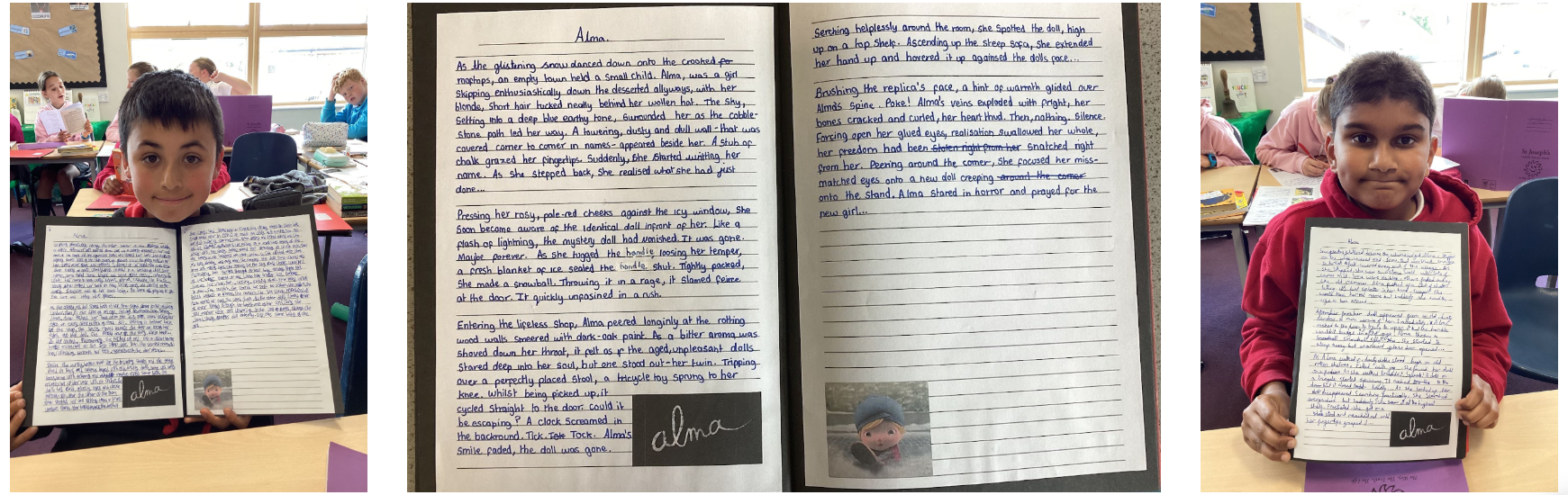
The impact of our writing curriculum is evident through the quality of work produced by pupils and the progress they make over time.
Pupils demonstrate:
- Increasing confidence and independence as writers.
- Strong transcription skills, including spelling, handwriting and punctuation.
- An expanding and ambitious vocabulary.
- A secure understanding of writing for different purposes and audiences.
- The ability to use grammatical knowledge effectively within their writing.
- Improved stamina for writing at length.
- Increasingly sophisticated use of language, structure and authorial techniques.
Assessment, pupil outcomes and work in books show clear progression from each starting point. Pupils can discuss their writing choices confidently, explain how authors influence their work and apply previously taught skills across a range of writing contexts.
By the time pupils leave our school, they are equipped with the knowledge, skills and confidence to write effectively, accurately and creatively for a wide range of purposes and audiences.
Handwriting
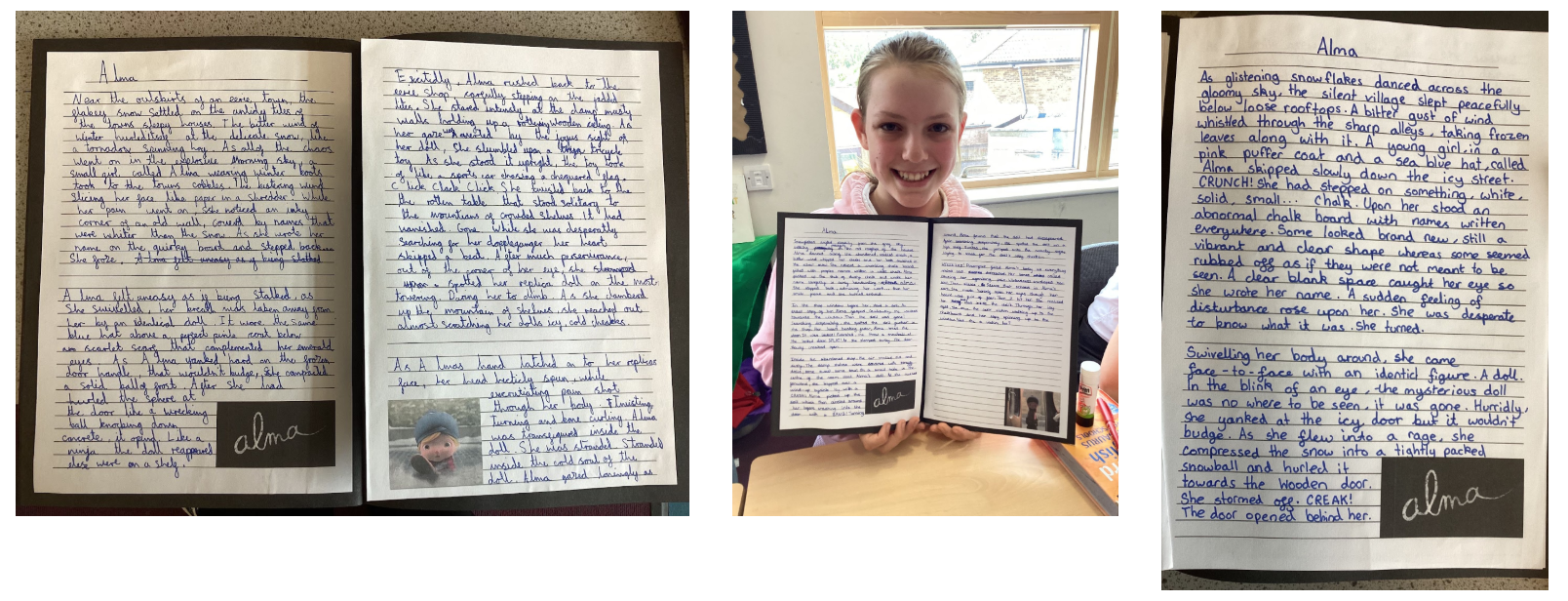
Within the Read Write Inc. Handwriting programme, children first develop secure letter formation, correct sizing and accurate positioning on the line. Once these foundational skills are established, they are introduced to a more mature handwriting style that prepares them for joining by teaching letters with entry and exit strokes. Joined handwriting is then taught progressively through explicit instruction in diagonal and horizontal joins. This structured approach ensures that children develop fluency, consistency and legibility, enabling them to write confidently and efficiently as they move through Key Stage 2.
Spelling
At St Joseph’s, we use Read, Write Inc to teach children Phonics across EYFS, KS1 and beyond. Children will learn to spell decodable words and common exception words once they can identify them in their reading.
Vocabulary
Through our strong focus on reading, we enrich children's vocabulary by engaging them with high-quality texts, use of shared and modelled writing and ensuring that children are provided with regular opportunities to help them to choose language that matches the tone and genre of their writing.
Spelling, Punctuation and Grammar
At St Joseph’s, we have developed a Place Value of Grammar document that is carefully aligned with the expectations of the National Curriculum. This progression document identifies the key grammatical knowledge and skills to be taught within each year group and builds upon them systematically, ensuring clear progression and increasing complexity over time. Teachers use the document to inform planning, enabling grammar to be taught in a structured and coherent way that supports pupils in developing secure, long-term understanding. As a result, children continually revisit, apply and deepen their grammatical knowledge throughout their journey at St Joseph’s.